


New Symbiosis Hints At World Of Undiscovered Microinteractions
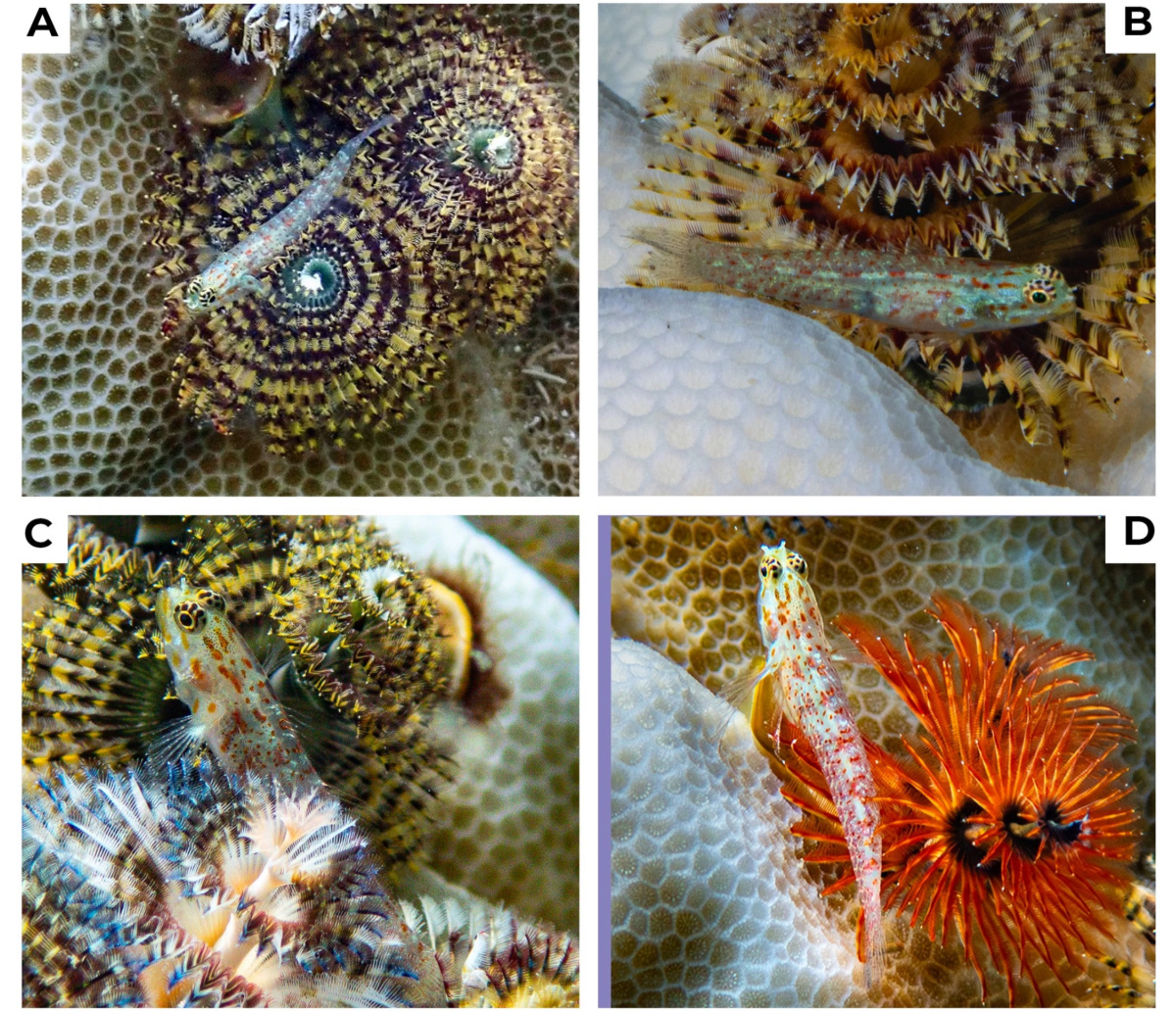
In a potential first time discovery, certain gobies and blennies have been seen to form previously undocumented associations with Christmas tree worms and other tube-dwelling worms on Caribbean coral reefs. The unusual behaviour is detailed in a new study in the journal Symbiosis.
Lead author on the study Morgan Bennett-Smith, a Ph.D. candidate in Boston University Marine Evolutionary Ecology Laboratory, noted that the behaviour was particularly strange because these worms are extremely skittish. Earlier research conducted by Bennett-Smith showed the same behaviour between fish and worms in Papua New Guinea.
“It may represent a widespread ecological phenomenon that scientists have simply overlooked, and suggests that there are potentially many microinteractions that remain undocumented,” said Bennett-Smith. “Coral reefs are host to various forms of life, and observing these small interactions could unveil new discoveries about how coral reef ecosystems function.”
This research grew out of the Boston University Marine Program (BUMP), involving undergraduate student researchers who learned scientific diving and underwater research methods through BUMP’s curriculum. For many students, this was their first experience conducting underwater research.
“Participating in projects like this is all I’ve ever wanted to do. From pouring over marine science books as a kid to now having the opportunity to work with researchers in the program and explore marine ecosystems, that’s what I spent every night dreaming about. It was the opportunity of a lifetime for me,” said Boston University undergraduate researcher Mason Murchison.
“Modern biology often focuses on genomics, big datasets, and advanced technology. Those tools are incredibly important, but discoveries still begin with people paying attention to the natural world. This study started because divers noticed something unusual and asked questions. The fact that we were able to connect observations from Papua New Guinea, Belize, and archival photographs from Bonaire highlights that many hidden interactions on coral reefs are waiting to be discovered,” remarked Bennett-Smith.
Groups of undergraduate researchers documented the gobies’ (Eviota rubrisparsa) interactions with Christmas tree worms through diver surveys, swimming over coral reefs and stopping for 10 minutes when they saw the fish and worms together. Uncovering and documenting these relationships is vital to understanding how coral reefs function and react to environmental change.
Bennett-Smith emphasized: “The field surveys the students conducted for their class project became an important part of this research, and I’m most proud of the student involvement in this study and the opportunity to introduce them to scientific research.”
The researchers noted that the nature of the relationship between the fish and worms is unclear and that this is potentially the first time the behaviour has been observed. It is not yet understood who benefits from the association, and determining whether it is a mutualistic, commensal or parasitic relationship would be one avenue for continued study. Additional investigation might involve bringing the fish and worms into a controlled lab environment to help uncover the nature of their relationship.


