


Rats Reshuffle Life on Tropical Island Reefs
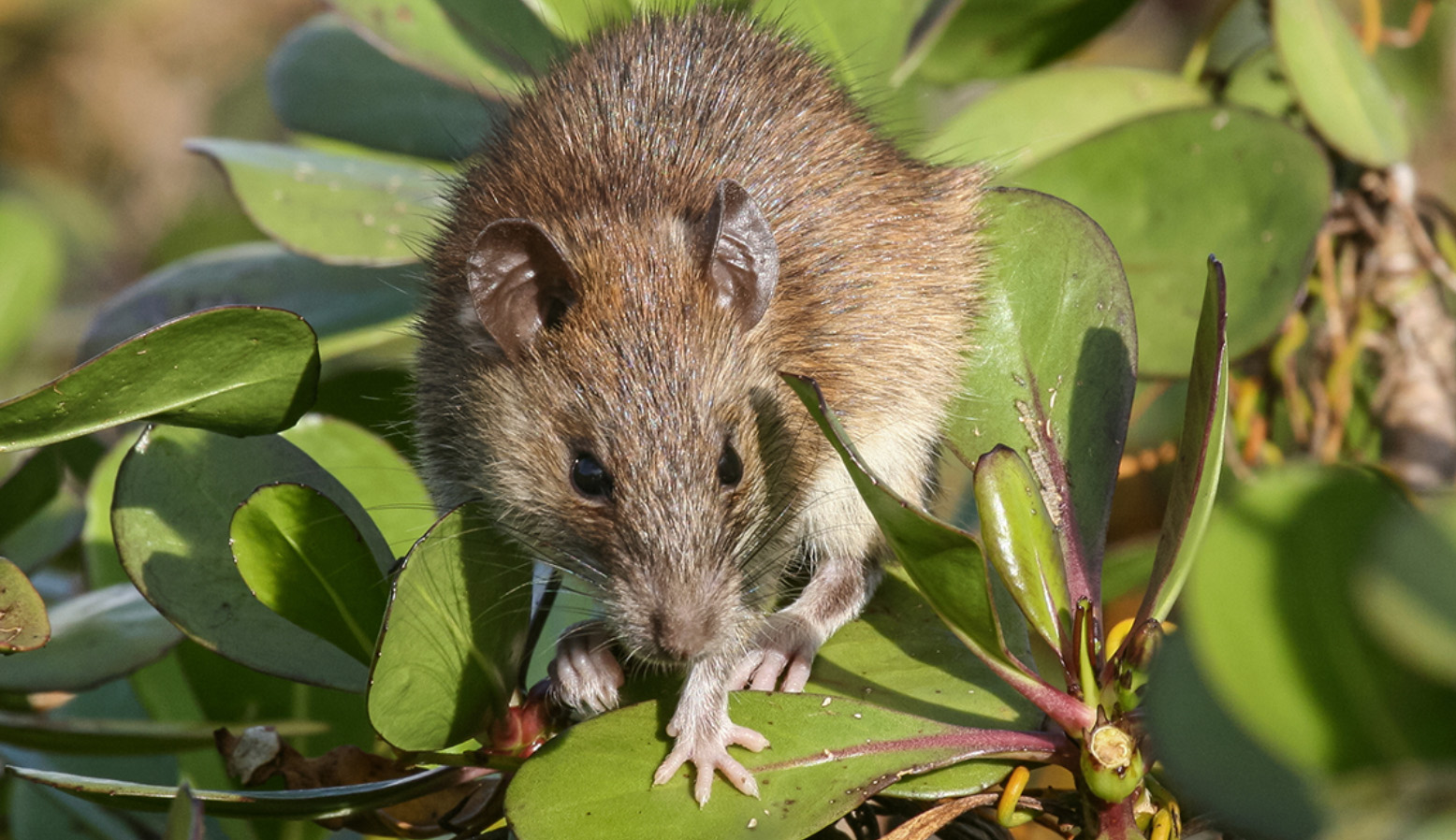
Rodents washing up on remote tropical islands centuries ago as unwitting stowaways on sailing ships have gone on to trigger a chain reaction that reaches all the way down to the smallest creatures living on nearby coral reefs. New research shows that where rats have taken hold, the tiny fish and invertebrates that form the base of the reef food web shift dramatically — with clear winners and losers depending on whether rats are present.
Scientists use the term “cryptofauna” for the small, cryptic fish and invertebrates that live among reef structures near the seabed. Species like gobies, triplefins, coral crabs, porcelain crabs and snapping shrimp rarely draw attention, but they punch well above their weight ecologically, acting as a crucial link that moves energy from the base of the reef up through the food chain.
A research team led by scientists at Lancaster University and the University of Texas surveyed these communities around a set of remote islands in the Chagos Archipelago in the Indian Ocean — some overrun with invasive rats, others rat-free — and found striking differences in which creatures dominate. Their findings appear in the journal Ecology.
Around islands with no rats, small reef fish such as gobies and triplefins vastly outweigh invertebrates in terms of biomass — by a factor of more than five to one. But around rat-infested islands, the balance flips much closer to even, with invertebrates such as crabs and shrimp making up a far larger share.
The mechanism connecting rats to reef life runs through seabirds. Rats prey on eggs, chicks, and occasionally adult birds, and on islands where they’ve become established, seabird numbers have collapsed — the study found seabird densities were roughly 760 times higher on rat-free islands.
That matters because seabirds act as nutrient couriers, feeding out in the open ocean and then returning to nest and roost on land. Their droppings deliver a steady stream of ocean-derived nutrients onto the islands, which then wash into the surrounding water and effectively fertilise the reef. Strip away the seabirds, and that nutrient subsidy dries up.
The pattern the team found was not simply “more nutrients equals more life” — it was more nuanced than that. Nutrient-rich, seabird-fertilised reefs favour small fish. According to lead author Laura-Li Jeannot, a PhD researcher at Lancaster University, cryptobenthic fish grow and reproduce extremely quickly, which means they need — and can capitalise on — a steady, high supply of nutrients. Where that supply exists, their populations expand, allowing them to muscle into habitat and outcompete invertebrates for both space and food.
Take the birds away, and the advantage flips. With fewer fish around to compete with, and with invertebrates’ generally lower metabolic demands suiting a leaner nutrient environment, crabs, shrimp and their relatives get a comparative foothold on nutrient-poor reefs.
Jeannot notes that this is one of the first studies to document how invertebrate cryptofauna respond to this kind of disturbance at all — until now, almost nothing was known about how these animals move energy through reef systems.
Because cryptofauna sit near the bottom of the reef food web, changes to their populations don’t stay contained. Cryptobenthic fish are thought to account for as much as 60% of all biomass consumed on coral reefs, making them a major nutritional pathway for larger predators.
The study found that predatory fish communities benefit substantially when seabird-derived nutrients are flowing and cryptobenthic fish are abundant. Co-investigator Dr Simon Brandl of the University of Texas explains that small fish make efficient prey — nutrient-dense and easily digested — compared with invertebrates, much of whose body mass is tied up in tough shell material that offers less nutritional return for the effort of catching them.
Jeannot summarises the broader implication: seabird nutrients travel up the food web primarily via fish, feeding both specialist fish-hunters and generalist predators alike. Add or remove that nutrient input, and the whole structure of energy flow through the reef gets rewired.
Professor Nick Graham of Lancaster University, also a co-principal investigator, frames the findings as evidence that seabird nutrient flows do more than simply boost reef productivity — they shape the entire trophic architecture of the reef, tipping the balance from fish-dominated to invertebrate-dominated energy pathways depending on whether birds are present.
The practical upshot is straightforward: protecting seabird colonies — and by extension, eradicating invasive rats from island ecosystems — is not just about saving birds. It’s a direct lever for preserving the structure and function of coral reef food webs offshore.
Source: Jeannot et al., Ecology (2026), DOI: 10.1002/ecy.70453


