


Reef Fish Show Resilience To Bleaching Devastation
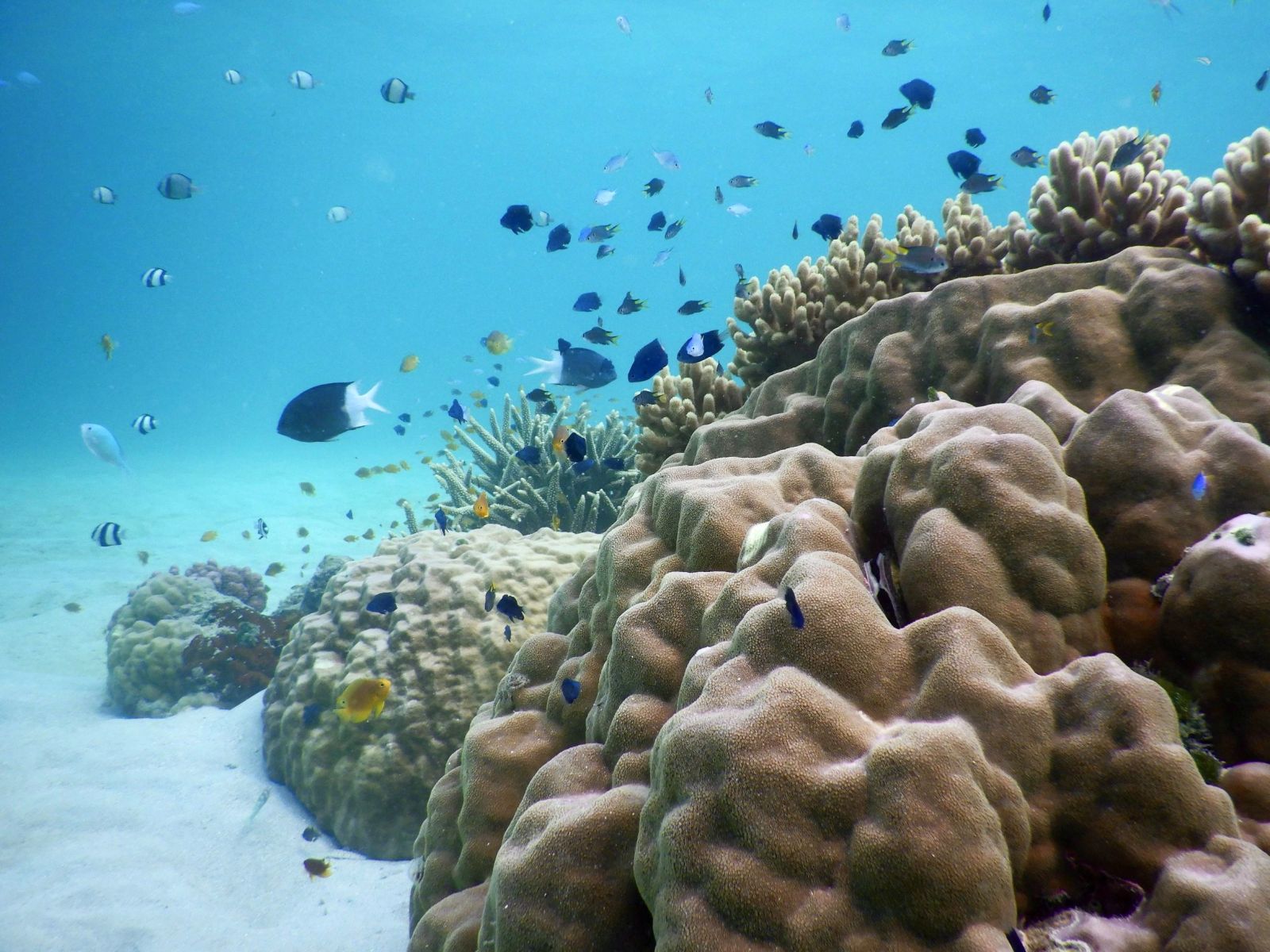
Fifteen years of survey data across the Indo-Pacific suggest reef fish communities ride out mass coral bleaching far better than expected — even the species that live on coral.
When bleaching strips a reef of living coral, the fish are widely assumed to follow. A new study from James Cook University (JCU) in Australia says it isn’t that simple.
Led by JCU PhD graduate Dr Pooventhran Muruga and published in Global Ecology and Biogeography, the research looked at how repeated heat-driven bleaching events between 2009 and 2024 affected fish across eight Indo-Pacific regions. It found no consistent drop in either species richness or overall fish abundance after bleaching — including among fish closely tied to corals.
“Our evidence suggests that fish declines after bleaching are not inevitable,” said Muruga. Looked at over longer timescales, he said, a fish community was almost as likely to grow as to shrink after a bleaching event.
The team sorted the 780 species recorded in the study regions into three groups: strongly coral-associated, moderately associated and not associated. The first group covers fish that eat coral or shelter in it — the species most reefkeepers would picture around a coral colony.
They are in the minority. According to Muruga, 78% of fish found on coral reefs are not tied to coral at all and also turn up in other habitats.
Using the citizen-science Reef Life Survey dataset alongside public records of bleaching severity and duration, the researchers ran a Bayesian model to track how each group changed over periods matching bleaching events. None of the three groups behaved consistently differently from the others. “Even fishes that need corals don’t respond in the way that we think they would,” Muruga said.
The authors argue that researchers have leaned too heavily on coral cover as the measure of what matters to reef fish. Future work, they say, should also weigh wave action, currents, the physical structure of the reef, and inputs of nutrients and plankton.
The findings come against a grim backdrop. Muruga noted that the past decade has seen three global mass bleaching events and five on the Great Barrier Reef, each causing heavy coral loss. Yet the fish, he said, have persisted — something he called an optimistic outlook.
The result doesn’t mean bleaching is harmless: coral loss still reshapes reefs. But it suggests fish communities may hold up better than the headlines imply while corals recover.
Source: JCU press release, 26 Nov 2026


